
Hospital pipework repairs at Darent Valley Hospital used hot tapping on live LTHW pipework, temporary bypasses and line stopping to replace deteriorated sections without a full system shutdown.
Project at a glance
Project: LTHW 8-inch main flow and return pipework repairs
Location: Darent Valley Hospital, Dartford DA2
Service: Specialist pipe isolation, hot tapping, line stopping and pipework repairs
Sector: Healthcare
Works included: Four 6-inch hot taps, four line stops, 10m bypass pipework, 8-inch pipe replacement, valves and AAV installation
How did our Team Approach the Hospital Pipework Repairs?
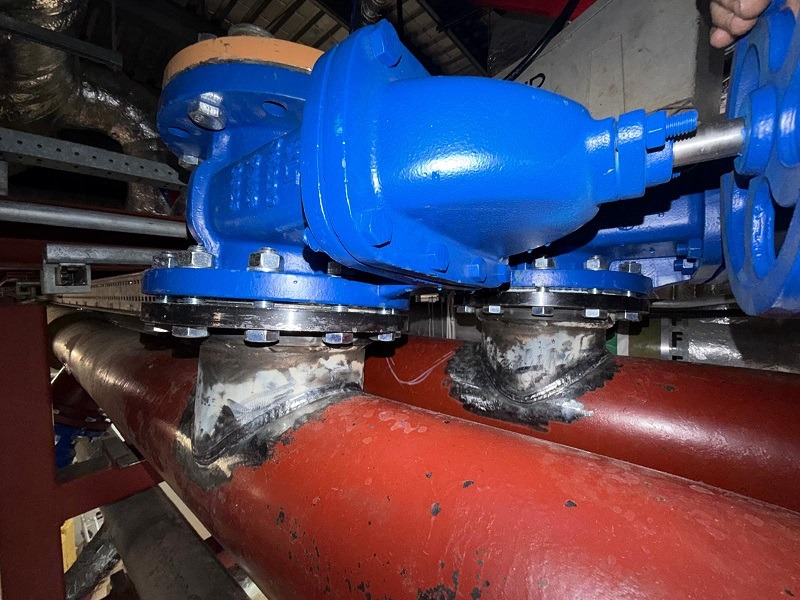
Darent Valley Hospital required repairs to deteriorated 8-inch LTHW flow and return pipework. The affected pipework served the West Plant Room and required controlled isolation. However, a conventional shutdown could have created unnecessary disruption within a healthcare environment. We therefore developed a specialist live pipework solution using controlled isolation and temporary bypasses.
What’s more, our experienced engineers combined hot tapping, line stopping, welding and valve installation. This approach allowed the team to isolate individual sections before replacing the affected pipework. As a result, the project addressed the damaged sections while maintaining control of the wider heating system.
What Challenges did the Hospital Need to Overcome?
The existing 8-inch LTHW flow and return pipework required targeted repairs. At the same time, the project needed careful management of the wider heating system. The affected pipework also sat at high level within the West Wing. Therefore, safe access formed an important part of the project preparation.
Our engineers established a temporary working area beneath the high-level pipework. They then erected a mobile access tower in line with site requirements and their training. This provided a stable working platform and allowed the repair works to progress safely and efficiently. Meanwhile, the planned isolation sequence allowed each stage of the project to progress in a controlled manner.
Why did the Project Require Specialist Pipe Isolation?
The repair required more than simply cutting out the deteriorated pipework. Our engineers needed to isolate specific sections while maintaining control of the wider heating system.
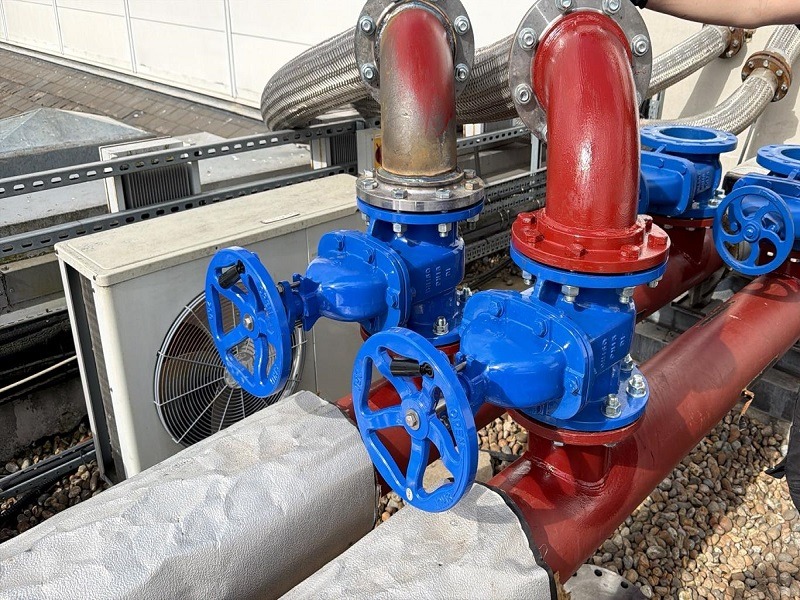
Therefore, the team created temporary bypass connections before the line stopping process began. These bypasses provided an alternative route around the sections requiring repair.
This targeted approach also avoided unnecessary intervention across the wider system. Within a hospital environment, careful pipe isolation can help reduce disruption during essential maintenance and give facilities teams greater control over critical building services.
How did Hot Tapping Services Create the Temporary bypass?
Our engineers carried out four 6-inch hot taps on the existing LTHW pipework. Two connections served the flow pipework, while the remaining two served the return.
Each connection incorporated a 6-inch welded flange, gate valve and associated flange. The team then pressure tested the completed connections before installing approximately 10 metres of flexible stainless steel bypass pipework.
These temporary bypasses provided an alternative route around the sections requiring isolation. Once established, the arrangement allowed the line stopping process to progress while maintaining control of the wider heating system.
What role did Line Stopping Play in the Repair?
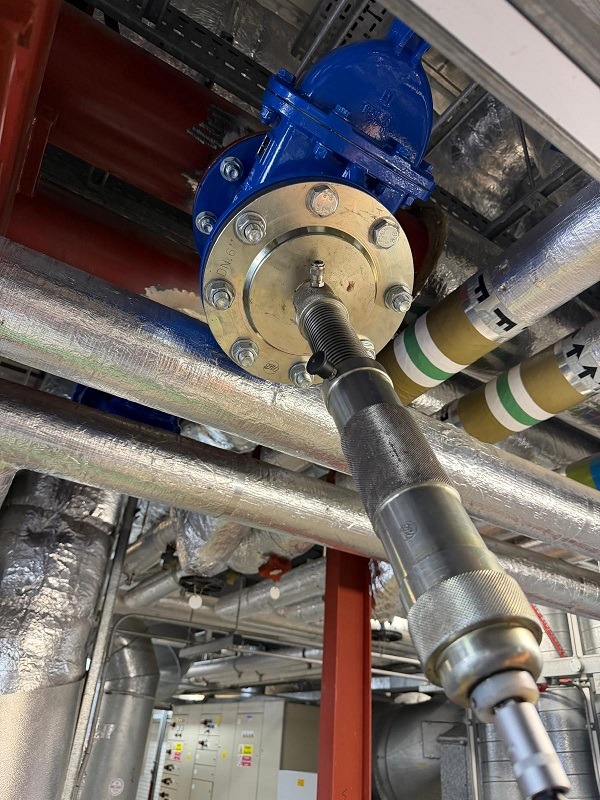
Once the temporary bypass arrangement passed testing, four line stops were installed to isolate the affected flow and return sections individually. The bypasses were opened before completion of the line stopping process. Once each section had been securely isolated, the pipework repairs could begin.
This controlled approach focused the works directly on the deteriorated sections and avoided unnecessary isolation across the wider heating network. For hospitals and other critical facilities, line stopping can support targeted maintenance where a wider system isolation could cause significant disruption.
How did our Team Replace the Deteriorated LTHW Pipework?
Our engineers welded two saddle tee sections onto the 8-inch headers, positioning the connections around the areas requiring isolation. Once the line stops secured the relevant section, the team cut out the deteriorated 8-inch pipework.
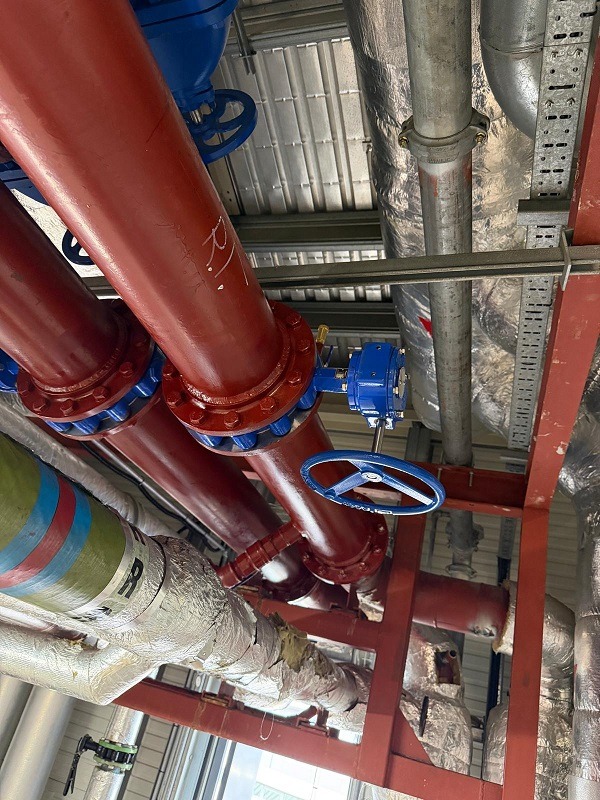
The engineers then welded new 8-inch flanges into position and installed an 8-inch geared butterfly valve to provide a new isolation point. A new spool piece also incorporated a 2-inch connection for an automatic air vent (AAV).
After securing the new components, the team removed the line stop and tested the completed section for leaks. Our engineers then repeated the process on the 8-inch return pipework. This restored both affected sections and introduced improved isolation arrangements for future maintenance.
What Improvements did the New Valves Provide?
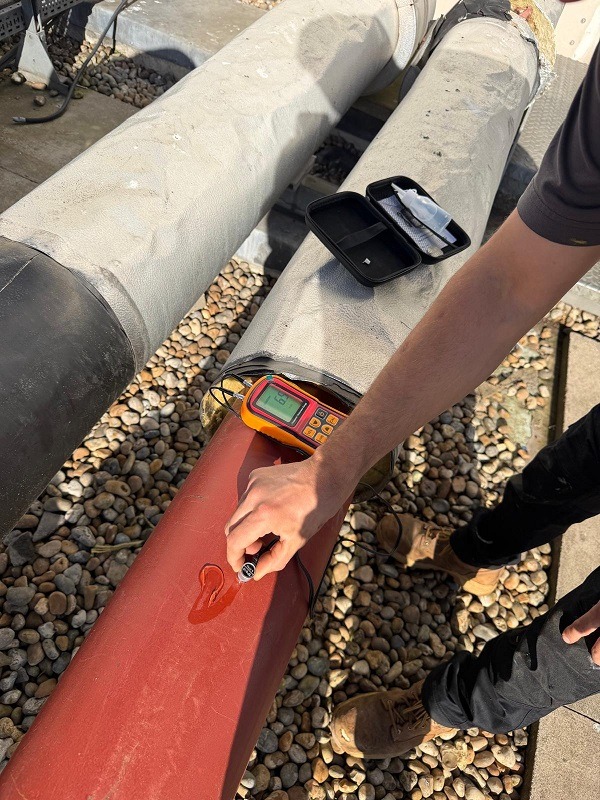
The project introduced new valve arrangements across the repaired LTHW sections. Our engineers installed 8-inch geared butterfly valves to provide dedicated isolation points. These additions can give facilities teams greater control when planning future maintenance on the affected pipework.
New spool pieces also incorporated connections for automatic air vents. Together, the new pipework, valves and AAV arrangements improved the maintainability of the repaired sections.
Our commercial valve fitting and replacement capabilities complement our wider pipe isolation services. Combining these specialist services can also simplify complex pipework projects for facilities and maintenance teams.
What did the Hospital Maintenance Project Achieve?
The project delivered a targeted repair solution for the West Plant Room. The works included repairs to two deteriorated 8-inch LTHW flow and return sections, four 6-inch hot tapping connections and four line stops for controlled isolation.
Approximately 10 metres of flexible stainless steel pipework created the temporary bypass arrangement. The project also introduced new 8-inch geared butterfly valves, replacement pipework and AAV connections.
Following testing, our engineers removed the temporary bypass hoses and capped the bypass valves. They then reinstated the affected insulation and cladding.
Finally, the team dismantled the access tower, cleared the working area and removed redundant materials. All waste was taken to an appropriate licensed refuse or recycling facility.
What was the Result?
The completed works replaced deteriorated sections of the hospital’s 8-inch LTHW flow and return pipework without requiring a full system shutdown.
Hot tapping created the connections required for the temporary bypass arrangement, while four line stops provided targeted isolation around the sections requiring repair. This controlled approach allowed the damaged pipework to be removed and replaced while reducing unnecessary intervention across the wider heating system.
New geared butterfly valves provided dedicated isolation points for future maintenance, while the new spool pieces incorporated AAV connections. Following successful testing, the team removed the temporary bypass arrangement and reinstated the insulation and cladding.
Most importantly, the project provided a practical solution to a complex pipework problem within a live healthcare environment, helping minimise disruption while improving future access and isolation for maintenance.
Related Pipework Projects
Industrial Pipework Installation in Canary Wharf
Our Canary Wharf project demonstrates our wider industrial pipework installation capabilities. The case study provides useful insight into pipework installation, fabrication and associated specialist works – read our project.
Pipe Freezing Process for Cost-Effective Pipe Maintenance
Our pipe freezing process guide explains how liquid nitrogen can create controlled pipe isolation. It also explains how the method can reduce draining requirements during maintenance – discover our related guide.
Frequently Asked Questions
What is the difference between pipe freezing, hot tapping and line stopping?
Pipe freezing creates a temporary ice plug inside a pipe, while hot tapping creates a live connection. Line stopping uses a temporary mechanical plug to isolate a section of pipe.
What are hot tapping services used for in hospitals?
Hot tapping services allow engineers to create new connections on live pipework. This approach can support temporary bypasses and targeted repairs without unnecessarily disrupting wider building services.
How does line stopping support hospital maintenance?
Line stopping isolates specific sections of live pipework. Therefore, engineers can complete targeted repairs while keeping the wider heating system operational where the project allows.
Can hospital pipework be repaired without a full system drain-down?
In suitable applications, specialist isolation techniques can avoid a complete system drain-down. We assess each project to determine the safest and most effective approach.
Need a Specialist Team for Your Next Project?
Speak to our experienced team about your project.
We can assess your pipework and recommend a practical isolation strategy.
Contact our specialists for a quote, please call 020 8302 7644 or email info@idwe.co.uk
As a leading Commercial & Industrial Contractor in London we provide Hot Tapping Services, Pipe Freezing Services, Shrink Fitting Services, Valve Fitting Services, Electrical Services and more.
View all services IDWe Ltd offer
Discover our latest projects, specialist services and company news
Follow us on social media: Facebook, X & LinkedIn.
