
Cryogenic pipe freezing provides a fast, controlled, and highly effective way to isolate live pipework without draining systems or shutting buildings down. While maintenance works take place mostly under the direction of Facilities Managers, Consultants, and Commercial / Industrial Building Managers. This service solves a common problem: how do you modify, repair, or extend pipework while systems stay operational?
This guide explains how cryogenic pipe freezing works, why buildings use it, and when it offers the safest solution. It also highlights practical considerations that help managers plan works, reduce risk, and maintain compliance. It also answers common search questions and shows real-world examples from complex London projects. Please read our guide below:
Can Buildings Stay Operational with Cryogenic Pipe Freezing?
Cryogenic pipe freezing isolates sections of pipework by freezing the contents using liquid nitrogen to create a ice plug. This process allows engineers to work on live systems without draining the system.
Unlike traditional shutdowns, cryogenic freezing avoids draining water, or other liquids from large systems. As a result, buildings continue to operate as normal. Engineers commonly use this method on:
- Chilled water systems
- Heating and LTHW systems
- Domestic water services
- Industrial and process pipework
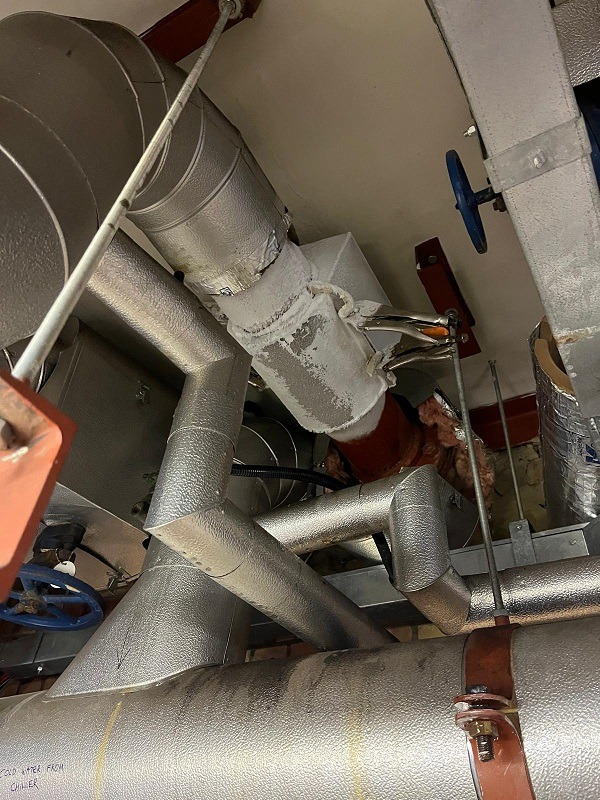
What is the Purpose of Cryogenic Freezing?
The main purpose of cryogenic freezing is to create a safe, temporary isolation point on live pipework. This approach allows engineers to carry out repairs, modifications, or new connections without disrupting occupants or operations.
This method supports continuity, rather than coordinating disruptive shutdowns, Facilities Managers can maintain heating, cooling, and water services while essential works move forward.
For example, in busy environments such as universities, hospitals, and commercial buildings, shutdowns increase operational risk and stakeholder pressure. Cryogenic pipe freezing reduces that burden by keeping systems online and predictable.
A recent project at King’s College London in Waterloo demonstrates this clearly. Engineers completed multiple live isolations in a fully operational academic building, avoided shutdowns, and protected teaching schedules and building access.
How Does Cryogenic Pipe Freezing Work?
How it works in practice:
Cryogenic pipe freezing uses extremely low temperatures, typically created with liquid nitrogen. Engineers apply a specialist freezing jacket around the pipe, which rapidly extracts heat from the pipe contents. As the liquid inside the pipe freezes, it forms a solid ice plug. This plug acts as a temporary valve, stopping flow upstream while work takes place downstream.
Meanwhile, site teams retain confidence that upstream systems remain stable. Pressure, temperature, and flow conditions stay controlled throughout the process. Once the work finishes, engineers allow the pipe to thaw naturally. Normal flow then resumes without damage to the system or the need for system recommissioning.
What is a cryogenic pipe?
A cryogenic pipe is not a special type of pipe. Instead, the term describes standard pipework that engineers freeze using cryogenic methods. Steel, copper, and stainless steel pipework all suit cryogenic pipe freezing. However, experienced engineers always assess pipe condition, wall thickness, and system pressure before starting. This assessment ensures a safe freeze and protects the integrity of the system.
Engineers use strict safety controls and specialist equipment. As a result, cryogenic freezing remains a safe and proven technique when carried out by trained professionals.
Key Benefits of Cryogenic Pipe Freezing
Why Facilities Managers choose this approach
This service offers several clear advantages over traditional isolation methods, particularly for Facilities Managers responsible for uptime, safety, and compliance:
- No system shutdowns – Buildings remain operational, helping Facilities Managers avoid complaints, lost productivity, and access restrictions.
- Reduced disruption – Occupants, tenants, and stakeholders experience minimal impact, which simplifies communication and planning.
- Time savings – Engineers avoid draining, refilling, dosing, and rebalancing systems, allowing projects to complete faster.
- Lower operational risk – Controlled isolation reduces the chance of leaks, contamination, or air ingress into closed systems.
- Cost efficiency – Shorter programmes and reduced downtime lower overall project costs and protect maintenance budgets – read our guide.
Because of these benefits, cryogenic pipe freezing fits live environments such as offices, data centres, universities, healthcare buildings, and industrial facilities.
Where is cryogenic pipe freezing commonly used?
It supports a wide range of applications, including:
- Valve replacements on live systems
- New branch connections
- Pipework repairs
- Plant room modifications
- Industrial pipework installations
In major commercial areas like Canary Wharf, cryogenic freezing often supports complex industrial pipework installation projects where shutdowns are not an option – read our Canary Wharf case study.
Cryogenic Pipe Freezing Services Across London and the South East
IDWe Pipe Freezers provides specialist cryogenic pipe freezing services across London, Kent, Surrey, Hampshire, Essex, East Sussex, West Sussex and beyond. Our engineers support commercial, industrial, and public-sector clients on projects of all sizes.
We also deliver complementary services, including industrial pipework installation and complex mechanical modifications. This combined expertise allows us to support projects from initial isolation through to full installation.
By working with a single specialist contractor, clients reduce risk, improve coordination, and achieve better project outcomes.
Get a quote today, please call 020 8302 7644 or email info@idwe.co.uk
Final Thoughts: Is Cryogenic Pipe freezing Right for Your Project?
If your project involves live pipework and shutdowns are not practical, cryogenic pipe freezing offers a proven solution. It keeps systems running, supports safe working practices, and aligns with the priorities of modern facilities management.
By working with an experienced provider like IDWe Pipe Freezers, clients gain confidence that systems remain protected, occupants remain comfortable. What’s more compliance requirements stay on track. For complex live environments across London and the South East, this service continues to set the standard for efficient, low-disruption pipework isolation.
Cryogenic pipe freezing F&Q
Can cryogenic pipe freezing be used while buildings remain occupied?
Engineers can design cryogenic pipe freezing specifically for live environments. As a result, offices, universities, hospitals, and commercial buildings remain fully operational during the works.
Does cryogenic pipe freezing, affect system pressure or performance?
There is no effect to the system, as the frozen plug creates a temporary isolation point while upstream pressure and system stability remain controlled. What’s more this avoids pressure drops, air ingress, and system imbalance.
Is cryogenic pipe freezing safe for older pipework?
In many cases, yes, however, experienced engineers always assess pipe condition, wall thickness, and material before freezing. This assessment protects older systems and reduces risk.
How long does a typical pipe freeze last?
Freeze duration depends on pipe size, system temperature, and liquid type. Engineers monitor the freeze continuously, allowing sufficient time to complete works safely without rushing.
Does cryogenic pipe freezing reduce project downtime?
It absolutely does, because systems stay live, this avoids shutdown coordination, recommissioning delays, and occupant complaints.
Can cryogenic pipe freezing support compliance and safety planning?
This service controls isolation and reduces risk, supports method statements, and aligns with safe systems of work in occupied buildings.
Contact us Today
Why choose IDWe Pipe Freezing?
We focus exclusively on safe, controlled live pipework solutions. Our team supports site managers, consultants, and contractors working in high-risk, high-occupancy environments. Rather than taking a one-size-fits-all approach, we assess each system carefully. Pipe material, diameter, pressure, and operating conditions all inform the freeze strategy.
Throughout the project, we communicate clearly with site teams. This approach ensures coordination, reduces uncertainty, and keeps stakeholders informed. As a result, clients achieve reliable outcomes without unnecessary disruption or last-minute changes.
Can we help you with your next project?
We help Facilities Managers, Contractors, and Building Managers reduce downtime, save money, and achieve sustainability goals. Our portfolio covers projects across the South East, making us the go-to choice for commercial pipe freezing in London.
IDWe Ltd has been a leading M&E contractor in commercial and industrial pipe freezing services for over 35 years. We specialise in high-quality solutions for industrial, commercial, and HVAC systems.
Call: 020 8302 7644
Email: info@idwe.co.uk
Let’s discuss your project and provide a tailored solution that keeps your systems running smoothly.
Our pipe freezing team operates across London, Kent, Surrey, Hampshire, Essex, East Sussex, West Sussex and beyond.

IDWe Ltd also offer more Industrial Services for commercial and industrial businesses, these include: hot tapping, electrical, mechanical, HVAC and more.
Get a quote today, please call 020 8302 7644 or email info@idwe.co.uk
Would you like to keep up to date with our latest news & projects? Follow us on social media: Facebook, X & LinkedIn